





What a Redhill terrace shares with next door
Redhill grew up after the London to Brighton railway arrived in 1841, and many of its streets are lined with Victorian terraces and semi-detached pairs, those of Earlswood just south of the centre among them. On houses built in rows, parts of the roof belong to two homes at once, and that shapes how a repair should be done.
- The party wall. The wall between two houses carries on up through the loft, and on some terraces it rises above the slates. Where each roof meets it there is a joint sealed with lead or mortar. When that joint fails, water can show up on either side.
- The chimney stack. Stacks usually sit on the party wall and hold the flues for both houses. A loose pot, cracked mortar at the top or split flashing on one side can let rain into both.
- The gutter run. One gutter often runs the length of several houses to a shared downpipe. A blockage outside one front door backs water up outside the next.
When CRB Roofing Building Ltd inspects a roof like this, we set out which faults lie on your side, which are shared, and what is worth raising with your neighbour before work starts.
Roof Repairs in Redhill: slates, tiles, leadwork and gutters
Victorian roofs were mostly covered in slate, held by nails that have now had well over a century to rust. When the nails go, slates slide out one at a time. A single slipped slate is a quick repair. A whole slope of them is a sign that the roof is wearing out.
Our roof repairs deal with leaks, slates and tiles that have broken or gone missing, flashing and leadwork that has failed, lead valleys and gutter faults. On a terrace we take care at the edges of your roof, where it joins the houses either side, so that the repair leaves those joints sound.
After a storm, emergency repairs are available. We are third generation roofers, and every repair is carried out by our own team.
Damp Proofing in Redhill
Parts of Redhill stand on low ground along the Redhill Brook, which now runs through the town largely out of sight in a culvert. Older houses with solid walls give damp several ways in, and the treatment depends on which kind it is. Our damp proofing always starts with a survey and inspection.
Rising damp climbs from the ground into the base of a wall, leaving a tide mark and crumbling plaster low down. The usual treatment is a new damp proof course injected into the wall.
Penetrating damp comes through the wall from outside. The sign is a patch that grows after rain. Open brick joints, an overflowing gutter or raised ground outside are the usual causes. The cure is to fix the defect and, where the brickwork needs it, to treat the outer face of the wall.
Condensation shows as black mould in corners and behind furniture, and is at its worst in winter. Ventilation upgrades are the answer. For cellars and other rooms below ground level we install tanking and waterproof membranes.
Flat Roofing in Redhill for back additions and extensions
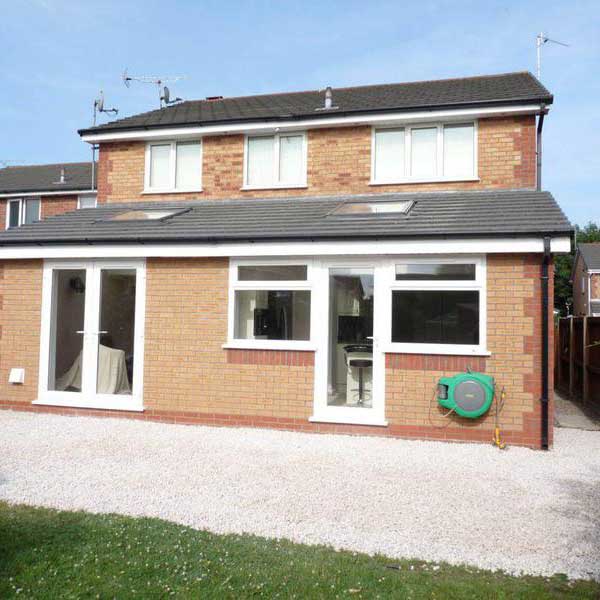
The back addition is the part of a terraced house that projects into the yard, usually holding the kitchen with a room above. Many have had a flat roofed extension added to the end. We lay and repair flat roofs, and rubber (EPDM), fibreglass (GRP), felt and torch on systems are all available. On a roof that is already there we trace the leak and seal it, patch tears and blisters, reinforce the edges and correct the drainage so that water does not stand.
Brick Repointing in Redhill
Victorian brickwork was laid in soft mortar that slowly weathers back. Once the joints are recessed, rain soaks into the wall and frost damages the brick faces. Our brick repointing takes the joints back to sound mortar and refills them in a colour that matches. We repoint front and back walls, chimneys, garden walls and parapets, including the low walls that divide the roofs on some terraces.
A New Roof in Redhill
Replacing the roof on one house in a row needs care where the new covering meets the old ones on either side. We form those joins so that both roofs stay watertight. Our new roofs are installed in slate and tile, and we can rebuild or take down a chimney during the same job. The scaffolding belongs to us and comes free with a new roof.
Chimney Repairs in Redhill
Because a stack on the party wall serves two houses, a repair is best agreed between both owners. Our chimney repairs cover repointing, rebuilds, removals and capping, and repairs to the flashing. Lead step and cover flashings are renewed where the old lead has split or come away from the brickwork.
Facias Replacement in Redhill
On a terrace the fascia and gutter often run unbroken from house to house. We replace your section with uPVC fascias and soffits and new guttering, and join it properly to the lengths on each side so that the shared run still drains. Our page on fascias, soffits and guttering explains the options.
Property Refurbishment in Redhill
Once the roof and walls are dry, the inside can be put right. Our property refurbishment service is there for homeowners and landlords alike: kitchens and bathrooms brought up to date, floors and tiling relaid, walls plastered or rendered, rooms decorated, and structural improvements where the layout needs them.
Questions about roofs on Redhill terraces and semis
Who pays for a shared chimney stack?
As a general rule, a stack built on the party wall and serving both houses is the responsibility of both owners, and the cost of repairing it is shared. Your deeds are the place to check, as arrangements differ. Talk to your neighbour before any work begins. We are glad to show both owners what we have found.
Can slate be swapped for a different roof covering?
It can, with some checks first. Concrete tiles weigh more than slate, so the roof timbers may need strengthening, and building control should be told about a change of covering. On a terrace a different material also stands out against the roofs either side. Natural slate, or a manufactured slate of the same size, keeps the row looking as one. A listed house, or one inside a conservation area, needs the council’s agreement first.
Why does the back addition roof leak first?
Three things work against it. The slope is usually shallower than the main roof, so water leaves it more slowly and wind can push rain up under the slates. It sits below the main roof and often takes the water from the gutter above. It also relies on a line of flashing where it meets the back wall of the house. Any one of these can let water in, and the room beneath is usually a kitchen or bathroom, where steam hides the first signs.
Arrange a roof inspection in Redhill
CRB Roofing Building Ltd has an address at 63 Nutfield Rd, Merstham, Redhill RH1 3ER. Site visits and quotations are free and carry no obligation. We hold public liability insurance, guarantee our work and are approved by Trustatrader. Our roofers also cover neighbouring Reigate. To book a visit, contact us.